Danny Wave / Articles
Personal Branding for Streamers Is What Viewers Remember After the Stream Ends

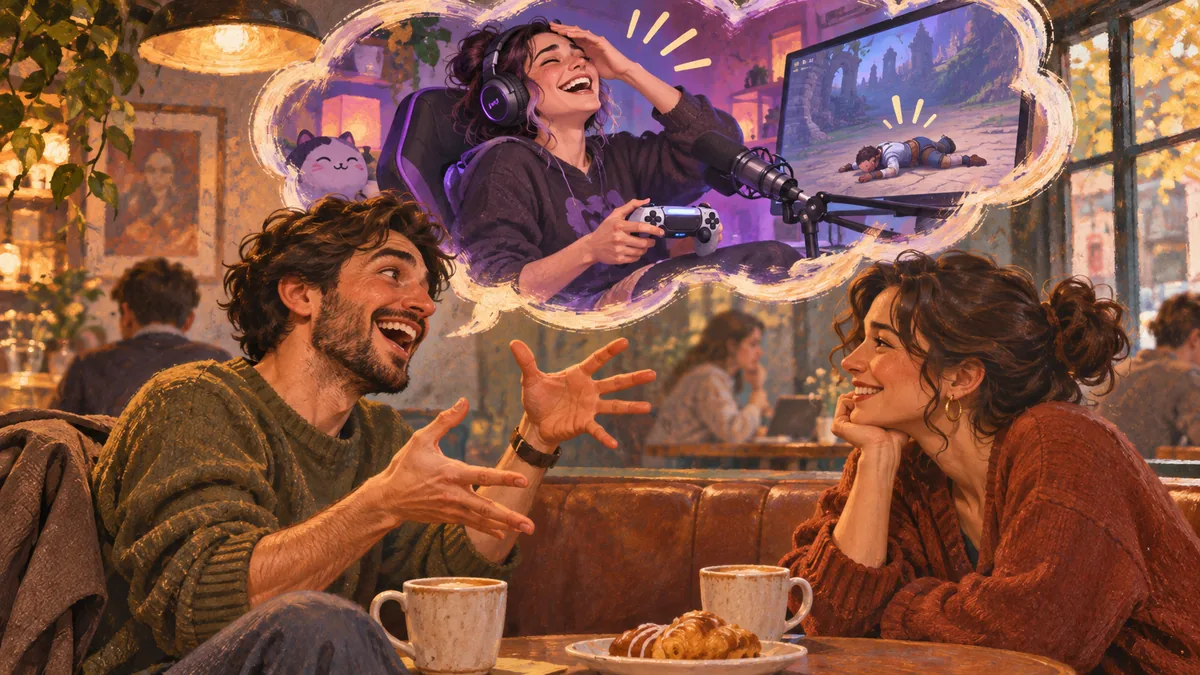
Here’s a quick test for personal branding for streamers, and it doesn’t need any design software.
Picture someone who watched your stream last week. They’re at a coffee shop telling a friend about it. They won’t mention the gradient on your overlay. They might say “he stays calm with chat even when he’s getting wrecked,” or “she explains every rotation like a nature documentary.”
Or they don’t bring you up at all, because nothing stuck.
That last one is the one to worry about. You can spend weeks on a logo, pay for animated alerts and redo your color palette three times, and still be forgettable. Not bad. Forgettable. Bad streams at least get talked about.
So here’s the definition I’d work from. Your brand is the experience a viewer can predict before they click and describe after they leave. It comes from a few choices: how you sound, what stays the same, what you promise, and whether people can tell a real person is making the calls. Graphics sit on top of all that. They can’t replace it.
What your logo can and can’t do
A clean logo helps people find you across platforms. I’ve done design work for a living, so I’m not going to tell you a webcam frame you threw together at 2 a.m. is fine. It isn’t.
But a logo really does one thing. It reminds people of an experience they already had. It can’t give them that experience.
Think about the streamers you keep going back to. You probably couldn’t draw their logos from memory. You could tell me exactly how they react to getting sniped, what their jokes sound like and whether their chat is a nice place to hang out. That memory is the brand. The logo is more like a receipt you find in your pocket a week later.
If you’re starting from zero, decide the stuff below first. Spend money on design second.
Your tone shows up when you lose
Everybody sounds about the same when they win. Victory Royale, a yell, a clip. Your tone lives in the much bigger pile of matches that go badly.
Say you get eliminated in Zero Build by someone who then emotes on your body. You could go quiet, sigh and requeue. Or you could narrate the whole collapse in a flat voice, like a sports commentator who’s seen too much, then ask chat to rate the emote out of ten. Neither is wrong. Only one gives a viewer something to describe to their friend.
The obvious pushback: “Isn’t this just being yourself?” Mostly, yes. But you have more than one version of yourself, and you get to pick which one is on by default. Calm or chaotic. Teaching or just playing. Dry, silly or sharp. People can settle into almost any of these. What throws them off is a stream that’s wholesome on Monday and mean on Thursday, because now they don’t know what they’re walking into.
One filter I’d use: pick a tone you can keep up on a bad night. If your brand only works when you’re in a great mood and dropping kills, that’s not a brand. That’s weather.
Consistency is about what people walk into
Most consistency advice stops at “stream at the same times.” A schedule helps. But a reliable schedule with an unpredictable stream is just a reliable way to confuse people.
The consistency that matters is what someone finds when they show up. Similar energy. The same kind of content, or a clear heads-up when it’s different. The same chat rules. The same welcome for a new person who says hi.
If a viewer tells their friend you do “chill Zero Build sessions where he answers questions,” and the friend shows up to a four-hour stream about your kitchen renovation, you didn’t show range. You broke a promise you never said out loud.
Changing things is normal. Games fade, formats get stale, you get bored. The difference is whether you explain it. A switch with a reason sounds like an update. A switch with no reason is a mystery, and people rarely stick around to solve it.
Every title and segment is a promise
Your stream titles, your recurring bits and your event announcements all tell people what they’ll get. Over time, your reputation is basically a record of how often you deliver.
Community events make this really obvious. I run community Fortnite tournaments with a wheel giveaway, and the tournament page lays out how it works. I also put a bounty on myself. A close friend in chat suggested it, so I did it. Take me out, win a skin. Some people take me out and then emote on me, which I’ve decided to count as engagement.
The point is that it’s a deal anyone can understand in one sentence before they queue, and then it actually happens.
You don’t need to run a tournament. You need promises that are specific and that you can keep. “Best stream on Twitch” isn’t a promise. It’s a typo with confidence. “Viewer games every Friday, everyone who joins gets a match” is something a viewer can check. Smaller promises are easier to keep, and keeping them is how people start to trust you.
Be a specific person without handing out your diary
The pressure to be relatable usually pushes people to one of two extremes. One is the polished host who never admits anything went wrong, which comes off like a press release wearing a headset. The other is oversharing, which feels less like connection and more like a stranger handing you their diary at a bus stop.
The middle is small, specific habits. A drop spot you defend for no good reason. Forgetting to unmute after every break. Getting way too excited about a weird item interaction. Remembering your regulars and what they told you last week.
On my stream, a great shot with anything but a shotgun is a “Superior Shot.” I play mostly pistols and mid-to-long range, and I’d rather skip a close shotgun fight when I can. I also pick the music to suit the room. None of that is personal information. It just makes it obvious who’s making the choices.
Here’s a self-check. If someone swapped your face and voice with another streamer playing the same game, would your regulars notice anything else was different? If they’d still recognize the jokes, the habits and how you handle chat, that’s the part nobody can copy by buying your overlay.
Your clips should sound like you
A lot of people meet you through a clip, a Short or a TikTok before they ever see you live. That first impression should feel like the same person, not a louder version made for strangers.
The mistake is easy to make. You cut your loudest moment because loud gets attention, and now your clips promise screaming while your streams are calm and talky. Someone follows the clip, shows up, and feels like they walked into the wrong room. A calm, funny clip that sends people to a calm, funny stream builds a bridge to the right place.
It also helps to have one home base that ties everything together. I built my own site for that, so streams, events and community all live in one spot.
Write the sentence first
Before you pay for another graphic, try writing the one sentence a viewer would use to describe your stream to a friend.
If you can’t write it, they can’t either. Fix that first. Pick the tone you’ll keep on bad nights, the experience people can count on, and one promise you’ll keep every single week.
Then make the logo. It’ll look better once there’s something worth remembering underneath it.
Follow along on Twitch, TikTok, YouTube, Instagram and Discord.